Samsung’s latest high-powered flagship launched on Wednesday, with the Galaxy S26 Ultra taking aim at the iPhone 17 Pro Max. Here’s the tale of the tape for the two smartphone heavyweights.
Samsung Unpacked took place on February 25, and saw the South Korean electronics giant introduce its latest smartphone lineup. As usual, this included a lot under the Galaxy S26 brand, covering a wide range of performance levels and price points.
The highlight model is the Samsung Galaxy S26 Ultra, its highest-specification model and largest device on the roster. One that everyone will be comparing with Apple’s similarly-framed model, the iPhone 17 Pro Max.
iPhone 17 Pro Max vs Samsung Galaxy S26 Ultra – Specifications
| Specifications | iPhone 17 Pro Max | Samsung Galaxy S26 Ultra |
|---|---|---|
| Starting Price (launch) | $1,199 | $1,299 |
| Dimensions (inches) | 6.43 x 3.07 x 0.34 | 6.44 x 3.07 x 0.31 |
| Weight (ounces) | 8.22 | 7.55 |
| Processor | A19 Pro | Snapdragon 8 Elite Gen 5 |
| Storage | 256GB, 512GB, 1TB, 2TB | 256GB, 512GB, 1TB |
| Display type | 6.9-inch Super Retina XDR, ProMotion, always-on display, 3,000 nits max |
6.9-inch Dynamic LTPO AMOLED 2X, 120Hz, HDR10+, 3,000 nits max |
| Resolution | 2,868 x 1,320 at 460 ppi | 3,120 x 1,440 at 498 ppi |
| True Tone | Yes | No |
| Biometrics | Face ID | Under-display fingerprint reader |
| Connectivity | 5G (Sub-6GHz and mmWave) Gigabit-class LTE Wi-Fi 7 Bluetooth 6 Ultra Wideband Gen 2 NFC Emergency SOS via Satellite Roadside Assistance via Satellite USB-C |
5G LTE Wi-Fi 7 Bluetooth 6 NFC USB-C |
| Rear Cameras | 48MP Fusion, 48MP Ultra Wide, 48MP Telephoto with 8x optical zoom, Camera Control |
200MP wide with OIS, 10MP Telephoto with 3x optical zoom, 50MP periscope telephoto with 5x optical zoom, 50MP ultra-wide, |
| Video | 4K 120fps, 4K 120fps HDR with Dolby Vision, 1080p 240fps or 4K 120fps Slo-Mo ProRes 4K 120fps with external recording, Cinematic Mode, Dual Capture 4K Dolby Vision 30fps Action Mode |
8K 30fps, 4K 120fps, 1080p 240fps, 10-bit HDR, HDR10+, Stereo sound recording, Horizontal Lock electronic image stabilization |
| Front Camera | 18MP Center Stage | 12MP |
| Battery Life (Video playback time) | Up to 39 hours | Up to 31 hours |
| Colors | Cosmic Orange, Deep Blue, Silver |
White, Sky Blue, Black, Cobalt Violet, Silver Shadow, Pinkgold |
iPhone 17 Pro Max vs Samsung Galaxy S26 Ultra – Dimensions, weight, and design
The iPhone 17 Pro Max is the biggest in Apple’s range, both in terms of screen size and in physicality. At 6.43 inches long and 3.07 inches wide, it has a fairly large footprint for a smartphone, but that makes sense for something with “Max” in the name.
Samsung’s Galaxy S26 Ultra is approximately the same size, if a tiny bit longer at 6.44 inches by 3.07 inches.
At 0.34 inches thick, the iPhone 17 Pro Max is heftier than the Ultra’s 0.31-inch-thick enclosure. This also translates into a weight difference, with the Pro Max heavier at 8.22 ounces to the Ultra’s 7.55 ounces.
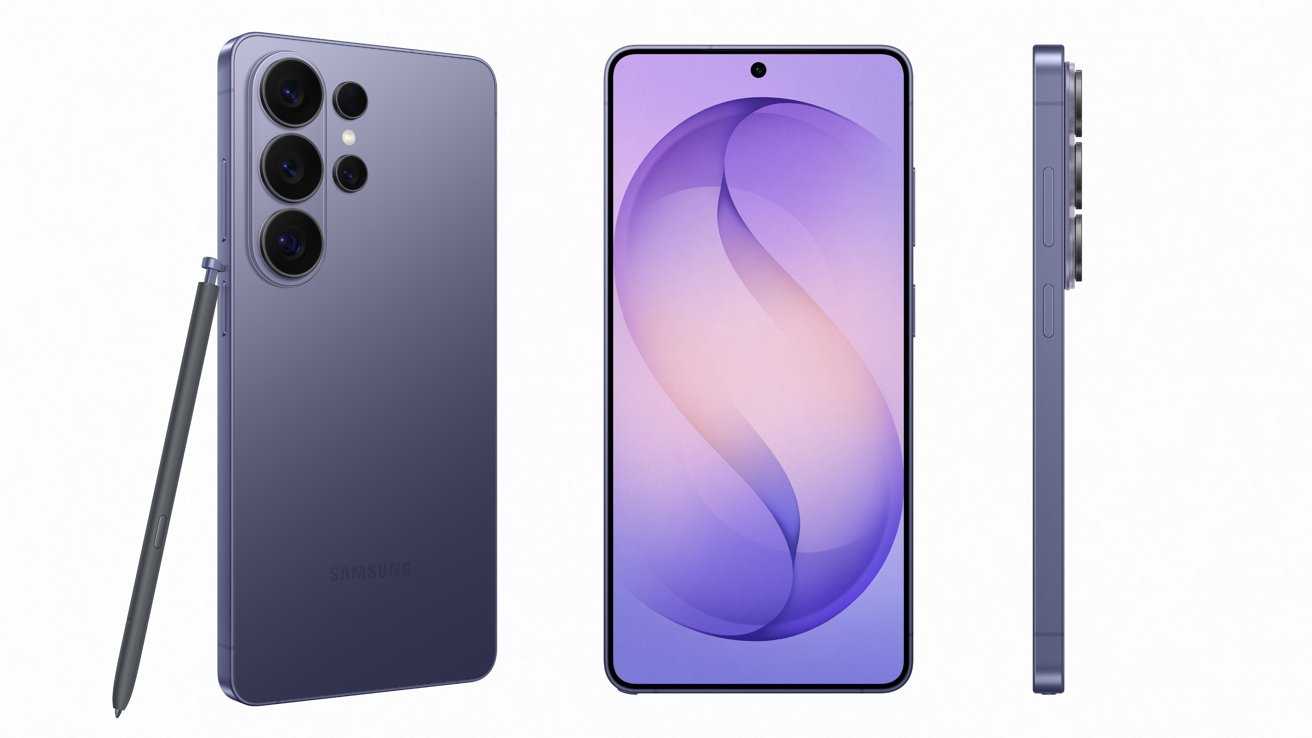
iPhone 17 Pro Max vs Samsung Galaxy S26 Ultra: The Ultra is just a tiny bit longer and thinner.
For the iPhone 17 Pro Max, Apple switched from its use of titanium in its predecessor back to aluminum, resulting in the weight gain.
Samsung has gone the same way, losing its own titanium frame for an aluminum alloy.
iPhone 17 Pro Max vs Samsung Galaxy S26 Ultra – Display
While the two smartphones are practically the same width and length, you can easily assume the displays to be roughly similar as well. And you’d be right.
Apple calls its screen a 6.9-inch Super Retina XDR, an OLED panel with an always-on capability. Capable of displaying HDR content, it has Wide Color (P3) support and True Tone, and a 2,000,000:1 contrast ratio.
Samsung also uses a 6.9-inch display, with it using an LTPO AMOLED 2X panel. It also deals with HDR content, including HDR10+ support.
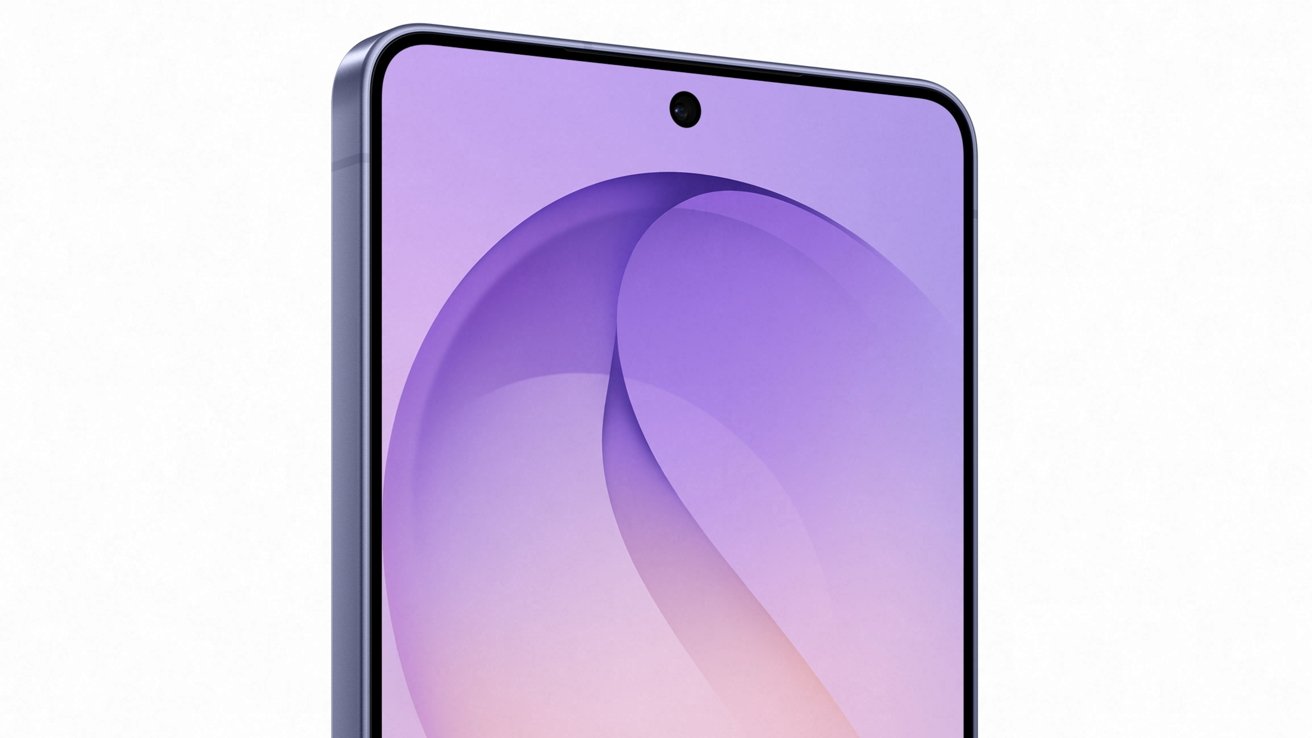
iPhone 17 Pro Max vs Samsung Galaxy S26 Ultra: Samsung’s 6.9-inch display with punch hole camera
In terms of capability, Apple’s screen has ProMotion, its adaptive refresh rate system that can go as high as 120Hz. Samsung’s can also go to 120Hz if needed.
For brightness, the Ultra has a maximum of 3,000 nits at its peak. The iPhone goes to 1,000 nits for typical content, 1,600 nits peak brightness for HDR content, or 3,000 nits peak brightness when used outdoors.
Despite being similarly sized, there is a difference in resolution.
The iPhone has a resolution of 2,868 by 1,320, giving it a pixel density of 460 pixels per inch. Samsung’s, however, goes to 3,120 by 1,440, with a higher density of 498ppi.
Technically, Samsung has the higher resolution screen. But at these levels on such a small display, it’s not really going to be a massive difference to consumers.
iPhone 17 Pro Max vs Samsung Galaxy S26 Ultra – Cameras
An obvious difference in the design of the two smartphones comes in with the cameras on the back. Chiefly, Samsung continues to have more of them.
There are also some aesthetic changes in the Ultra, in that the bump-free rear has now got one for three of the cameras. Apple migrated from a smaller square bump in favor of its new wider bump or “plateau” in Apple marketing speak.
When it comes to the actual cameras, Samsung has a few more tricks up its sleeve.
The Pro Max has three cameras, consisting of a 48MP Fusion camera, with a second-generation sensor-shift OIS system and 100% Focus Pixels. It also doubles as a virtual 12MP 2x “Optical Quality” Telephoto thanks to some cropping-based trickery.
There’s also a proper 48MP Fusion Telephoto lens with a 4x optical zoom, 3D sensor-shift OIS, and Apple’s fancy tetraprism lens system. Using a similar crop-in trick, Apple claims it can do a 12MP 8x “Optical Quality” zoom too.
Lastly, the 48MP Fusion Ultra Wide has a 120-degree field of view and Hybrid Focus Pixels.
Apple also includes its usual array of photography features, including Portrait Lighting thanks to its rear LiDAR scanner, 48MP macro photography, the Photonic Engine and Deep Fusion, Night Mode, Panorama, ProRAW support, and Spatial Photos, among others.
Samsung’s camera roster starts off with a 200MP wide camera with OIS. There’s a second Ultra Wide camera with a 50MP resolution, 120-degree field of view, and Dual Pixel PDAF.
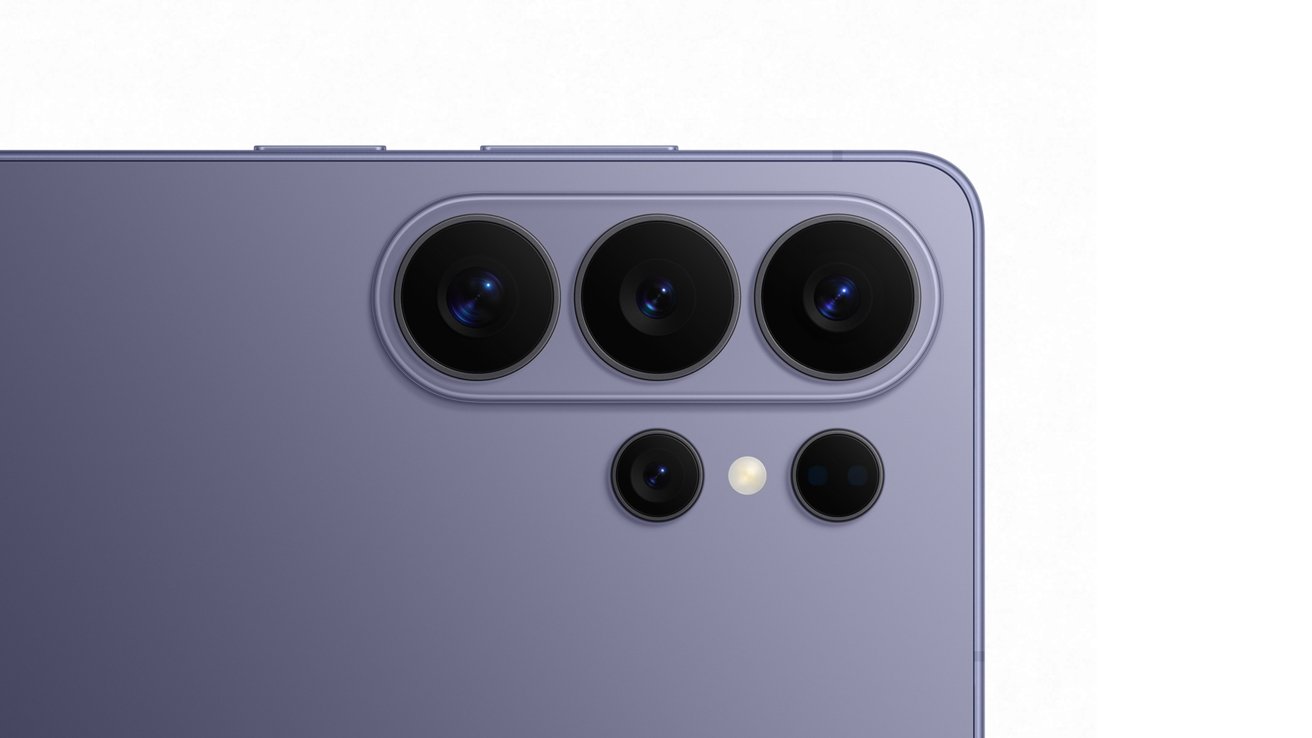
iPhone 17 Pro Max vs Samsung Galaxy S26 Ultra: Samsung has more physical cameras on the rear than Apple
There are two telephoto cameras, with a 10MP option having a 3x optical zoom. The other is the 50MP periscope telephoto with OIS, offering a 5x optical zoom.
Samsung also claims there to be a 10x optical quality zoom capability, while its AI-enhanced Space Zoom can go up to 100x.
It also pulls off the same depth-based assistance, thanks to its Laser AF feature.
Computational photography also makes an appearance on the Samsung, with object-aware features recognizing subjects and adjusting settings to match. It also has Expert RAW, which handles RAW files for more flexible editing.
When it comes to video, Samsung does pip Apple to the post in terms of resolution. The Ultra boasts 8K video at 30fps, with 4K at 120fps, and 1080p at up to 240fps.
Apple doesn’t do 8K, but it does do 4K at 120fps and 1080p at 240fps under Slo-Mo.
Both camera systems can capture HDR content, with Dolby Vision on the iPhone and HDR10+ support on the Ultra. Both can record in a variety of formats, including LOG for people who want cinema-level editing capabilities.
There’s even an electronic gyroscopic stabilization system on each, with Apple referring to its own as Action Mode. Samsung calls it Horizontal Lock, and does practically the same thing.
Around the front, Samsung uses a 12MP pinhole camera, complete with autofocus.
Apple’s choice of the 18MP Center Stage camera for the front is more interesting, in that it has a square lens. This allows for tricks like switching between portrait and landscape shots without rotating the iPhone, as well as automatic reframing when subjects move around.
Both sides have their narrow advantages here, but those who care about the overall image will be checking out Samsung’s example photos to see if they like them more than what the iPhone can produce.
iPhone 17 Pro Max vs Samsung Galaxy S26 Ultra – Processing and Performance
We are firmly in the onboard AI processing age, and it’s fair to say that Samsung has come to fight Apple here.
The iPhone 17 Pro Max has the A19 Pro chip, which has a six-core CPU with two performance and four efficiency cores. It’s joined by an Apple-designed six-core GPU, which also has hardware-accelerated ray tracing, as well as Neural Accelerators in each core.
Then there’s the 16-core Neural Engine, which works alongside those Neural Accelerators to significantly boost the onboard AI processing potential of the iPhone.
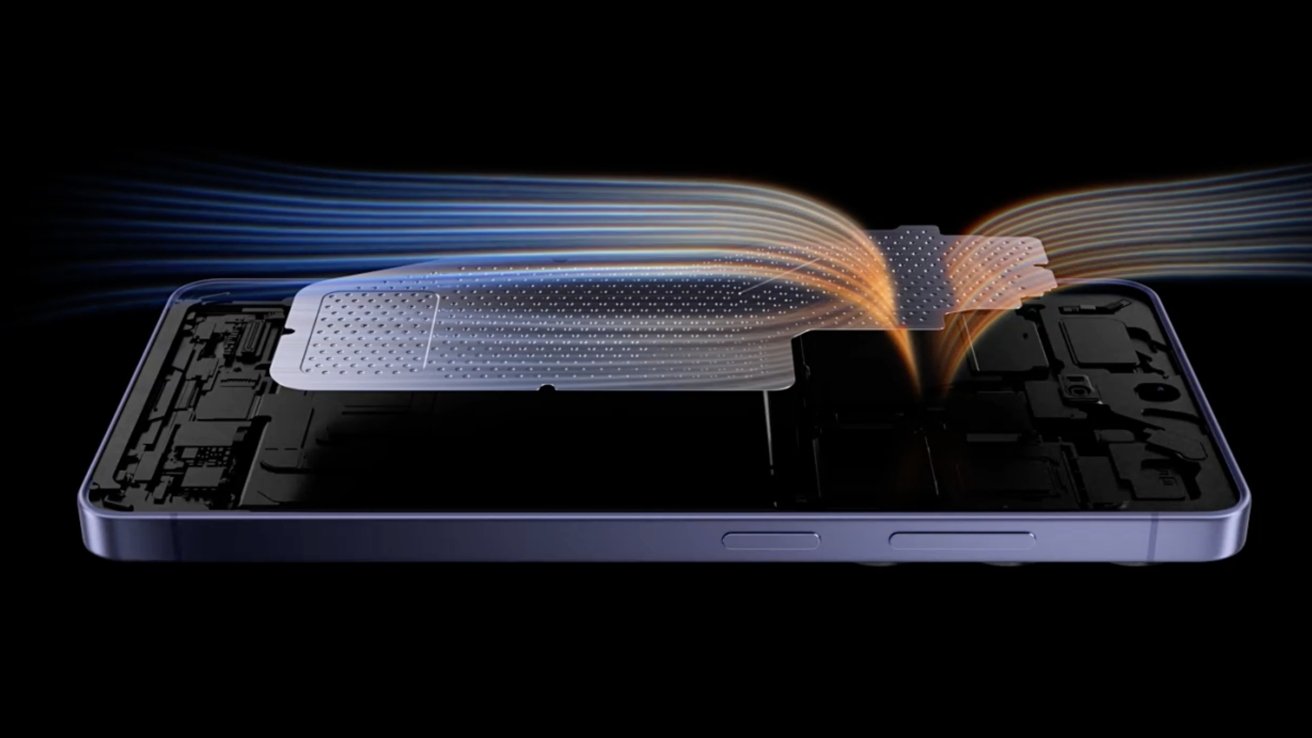
iPhone 17 Pro Max vs Samsung Galaxy S26 Ultra: Samsung also uses vapor chamber cooling in the Ultra.
Samsung went with the Qualcomm Snapdragon 8 Elite Gen 5, a 3-nanometer chip with an octa-core CPU. That is made up of two “prime” cores and six performance cores.
The included GPU is the Adreno 840, while AI is handled by the Hexagon NPU. This is an element with a 12 scalar, 8 vector, and 1 accelerator configuration, which can be used for Gen AI and other AI tasks.
While Apple made a big fuss about the A19 Pro having a vapor chamber to improve its thermals, it’s not the only device that does this. The Ultra does it too.
Muddying the waters is Samsung’s decision to vary the amount of memory it includes based on capacity. Some models have only 12GB of memory, but it’s possible to get 16GB if you’re lucky.
By comparison, Apple sticks to using 12GB regardless of storage choice.
While we don’t have a way to directly compare the two devices via benchmarking yet, we can look at another smartphone for results that should be in the same ballpark.
In the case of the Ultra, its Snapdragon 8 Elite Gen 5 is in use in the OnePlus 15.
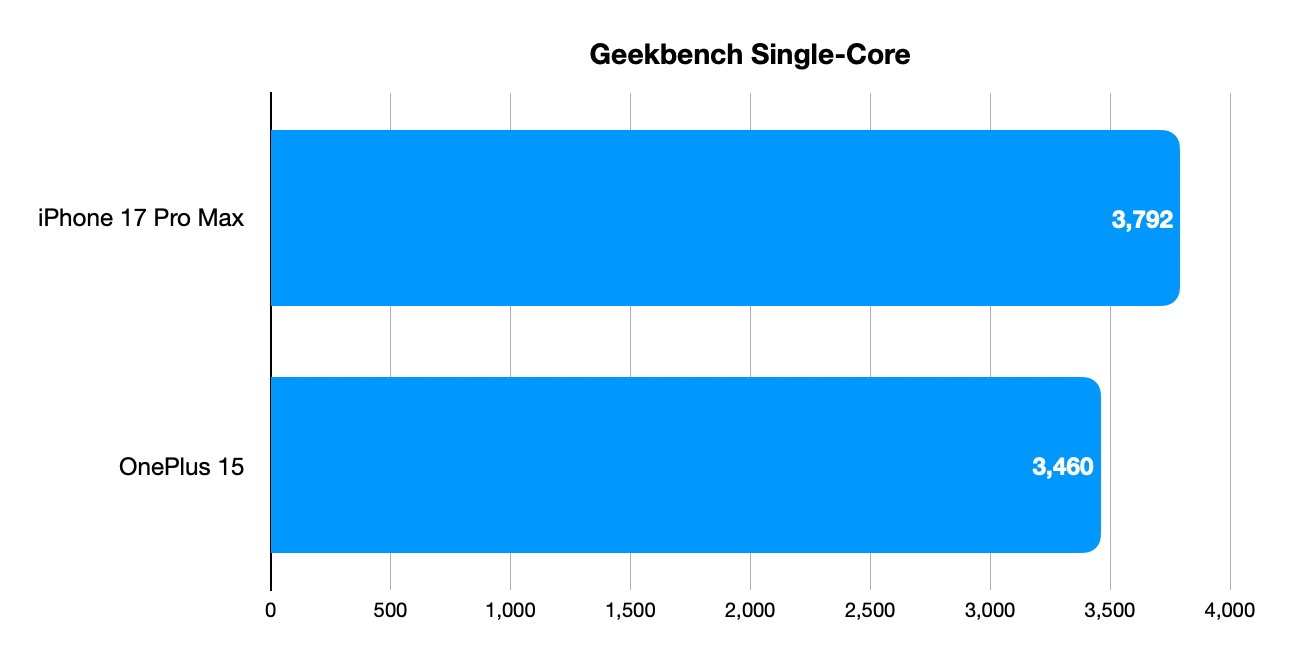
Single-core Geekbench scores for the OnePlus 15 and the iPhone 17 Pro Max
Looking at Geekbench results for the OnePlus 15 and the iPhone 17 Pro Max, the single-core test sides with Apple. The Pro Max manages to score 3,792, versus 3,460 for the OnePlus 15.
On the multi-core testing, the OnePlus 15 is a little ahead at 10,258 against 9,830 for the Pro Max.
This works out to be the iPhone being ahead by 9.5% on single-core performance, and the OnePlus 15 being ahead by 4.3% on multi-core tasks.
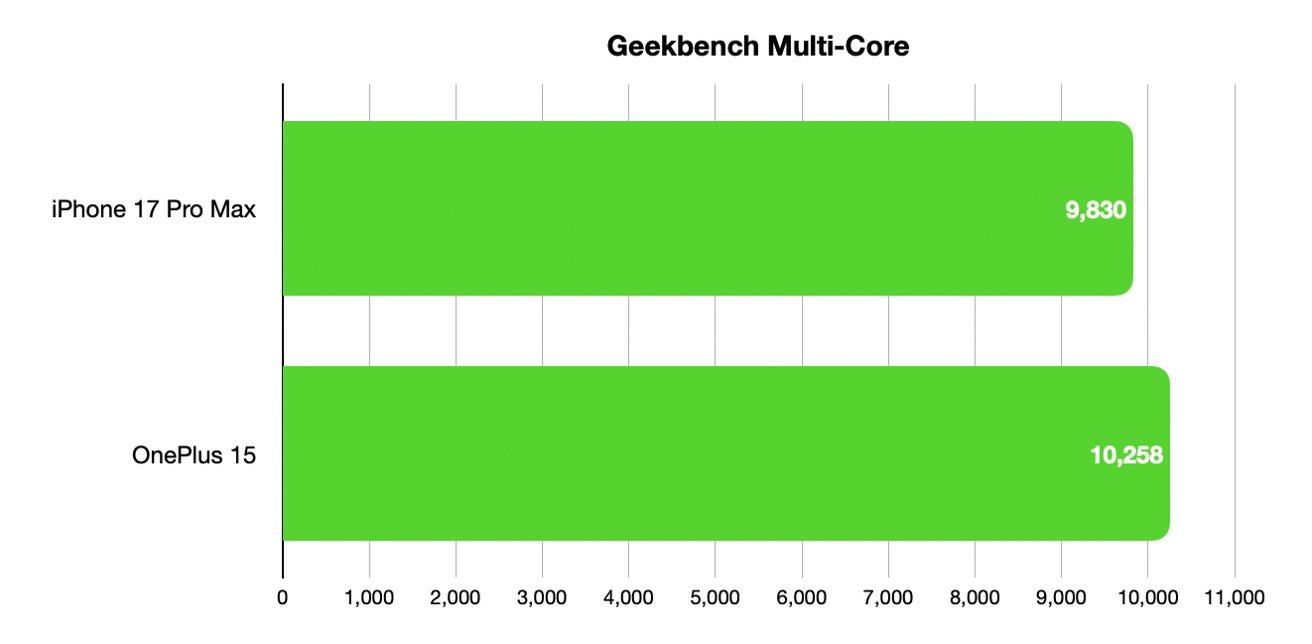
Multi-core Geekbench scores for the OnePlus 15 and the iPhone 17 Pro Max
While there will be some differences in terms of performance between the OnePlus 15 and Samsung’s device, we could say it’s mostly comparable.
What it means is that Samsung’s Galaxy S26 Ultra should be a decently fast smartphone, and one that would be on a par with Apple’s A19 Pro chip.
iPhone 17 Pro Max vs Samsung Galaxy S26 Ultra – Connectivity
As premium smartphones, both connect to 5G networks on both mmWave and sub-6GHz bands, as well as 4G LTE.
On a more local basis, there’s Wi-Fi 7 on both, but Samsung does go for Bluetooth 5.4 versus 5.3 on the Pro Max. Both also have NFC, with Apple also bundling Ultra Wideband Gen 2.
Both also boast satellite-based features, with each capable of handling limited messaging and emergency functionality.
For the physical connection, both companies use the standard USB-C port, and work at up to 10Gbps.
iPhone 17 Pro Max vs Samsung Galaxy S26 Ultra – Power and Battery
As manufacturers use different metrics to boast about how long their devices will last, a direct comparison is always hard to do.
For the iPhone 17 Pro Max, Apple describes it as capable of up to 39 hours of local video playback, or 35 hours when streaming it. Apple doesn’t officially disclose the battery capacity, but it has been found to be 5,088mAh.
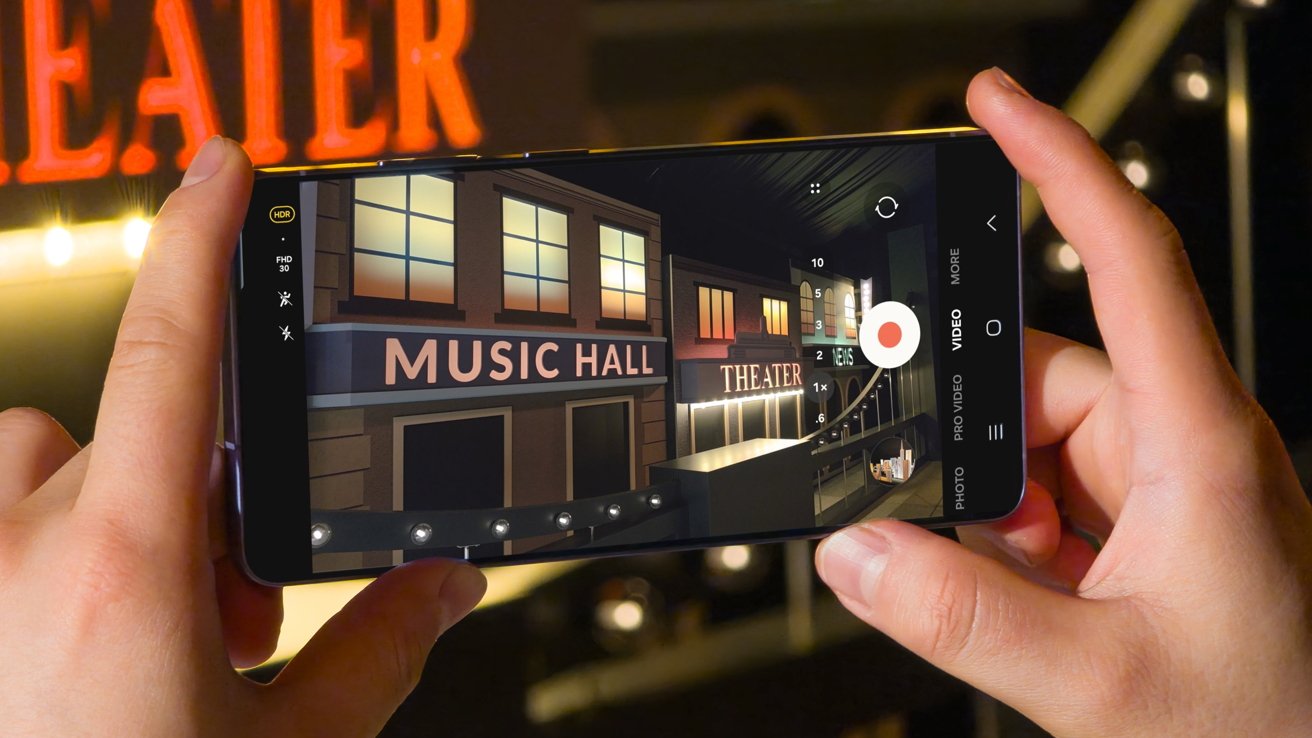
iPhone 17 Pro Max vs Samsung Galaxy S26 Ultra: Both smartphones boast more than 30 hours of video-watching time
Samsung, meanwhile, uses a 5,000mAh battery, which is practically the same. Actual usage for video playback is claimed at 31 hours for the Ultra.
For recharging, Apple claims that fast-charging is capable of a 50% charge in 20 minutes using a 40W adapter via USB-C, or 30 minutes using a 30W adapter and MagSafe or Qi2. The Ultra can use a 60W PD3-compatible charger to hit 75% in 30 minutes.
Samsung also has Qi2.2 support at 25W, but it also does reverse wireless charging at 4.5W. This is handy for using the Ultra to wirelessly recharge an accessory like earbuds, which Apple simply doesn’t do with its own hardware.
iPhone 17 Pro Max vs Samsung Galaxy S26 Ultra – Other Features
Both smartphones are rated to IP68 dust and water resistance.
Face ID is the chosen biometric security in the iPhone 17 Pro Max. Samsung went with an under-display fingerprint reader instead.
The Ultra also has a stylus, the S-Pen, which fits into a hole in the enclosure. Apple does not include stylus support on the iPhone series at all.
iPhone 17 Pro Max vs Samsung Galaxy S26 Ultra – Capacity, Color, and Pricing
The iPhone 17 Pro Max is sold in Deep Blue, Cosmic Orange, and Silver colorways.
Pricing starts at $1,199 for 256GB of storage, rising to 512GB for $1,399, 1TB for $1,599, and 2TB for $1,999.
The Samsung Galaxy S26 Ultra ships in a choice of Cobalt Violet, Sky Blue, White, and Black as standard, with Silver Shadow and Pinkgold as online exclusives.
Pricing starts from $1,299 for 256GB and 12GB of memory, rising to $1,499 for 512GB of storage and 12GB memory, and $1,799 for 1TB storage and 16GB memory.
iPhone 17 Pro Max vs Samsung Galaxy S26 Ultra – Which to buy
Anyone preparing to compare the top smartphone models of two major manufacturers will expect it to be a close race. You’d anticipate great specifications all round, but there will still be elements that stand out.
Here, Samsung’s new Ultra provides a very compelling package.
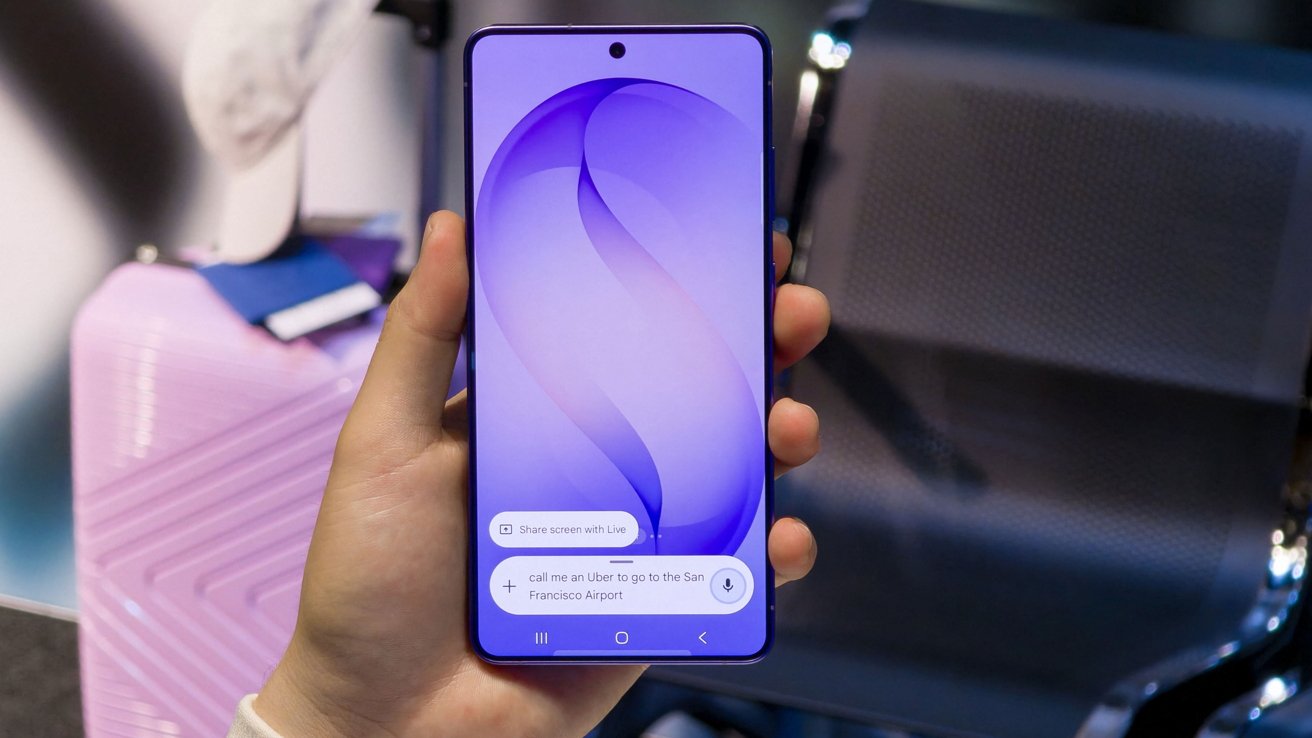
iPhone 17 Pro Max vs Samsung Galaxy S26 Ultra: Samsung’s new Ultra is great, but so is the Pro Max.
Having an extra camera as well as higher resolution sensors certainly helps the Ultra’s case here. That it also has a higher level of optical zoom and the AI-based version also works in its favor.
The higher resolution display is also good, albeit not quite as useful. At this level, it’s a very small increase in pixel count that the typical observer won’t see without a very close inspection.
Performance-wise, there’s not much in it. The iPhone is better for single-core tasks, which will make up most of what you’d use a smartphone for, but the multi-core tasks will run better on Samsung’s device.
Samsung’s AI functions are also quite impressive, thanks to its use of Galaxy AI, which uses Samsung’s own Bixby as an agent alongside other options, like Google Gemini. But that may not be as much of a differentiating factor for long, with Apple’s own AI efforts set to be improved using Gemini.
The key thing here is that Samsung has introduced the Ultra as a rival to Apple’s iPhone 17 Pro Max. It’s safe to say that it has made a definitive competitor to Apple’s largest and most powerful model.
While there’s not much between the two in general, the real winner here will be consumers. Anyone picking up either of these models will have a very capable and powerful device in their hands.
Where to buy (and save) on the iPhone 17 Pro Max and the Samsung Galaxy S26 Ultra
The Samsung Galaxy S26 Ultra can be preordered at Samsung.com starting at $1,299.99, with up to $900 in instant trade-in credit available during the preorder period.
Amazon is also accepting preorders, with up to $400 in bundle savings.
Wireless carriers are offering incentives on the iPhone 17 Pro Max at press time, with the best iPhone 17 Pro Max prices providing up to $1,100 in bill credits.
Here’s a roundup of the top iPhone deals going on today:
- T-Mobile: Get up to $1,100 off an iPhone 17 Pro Max with a qualifying trade and eligible plan*
- AT&T: Get up to $1,100 off via bill credits with an eligible trade and qualifying plan*
- Verizon: Get up to $1,100 in bill credits with a new line and Unlimited Ultimate plan*
*Terms and conditions apply, and offers are subject to change. Please see the carrier’s site for details.