‘Do you remember me phoning and saying, ‘Get over here! You won’t believe what’s happened!’” William Basinski is reminiscing with his old friend Anohni about the summer of 2001, when he made a startling discovery. Out of work and at a loose end, the experimental composer had decided to digitise some recordings he’d made in the early 1980s – snippets of orchestral music and muzak he found on shortwave radio stations. He was planning to add his own instrumentation, but as the tapes started playing on a loop he noticed something else was happening: the music was gradually degrading. The recordings were so old that the iron oxide particles were falling off the tape as they played. Soon, there would be nothing left but crackles and then silence.
It was every musician’s worst nightmare. But for Basinski it was like striking gold.
“Luckily,” he says, “by that point in my career, I was mature enough to know when to just get out of the way and see what happens.” Basinski spent two days recording a series of loops as the sound gradually collapsed over the space of 20 to 60 minutes. Then he called his friend. “I rushed over,” says Anohni. “We marvelled over it for hours. But at that point, we could never have imagined what it was going to become associated with.”
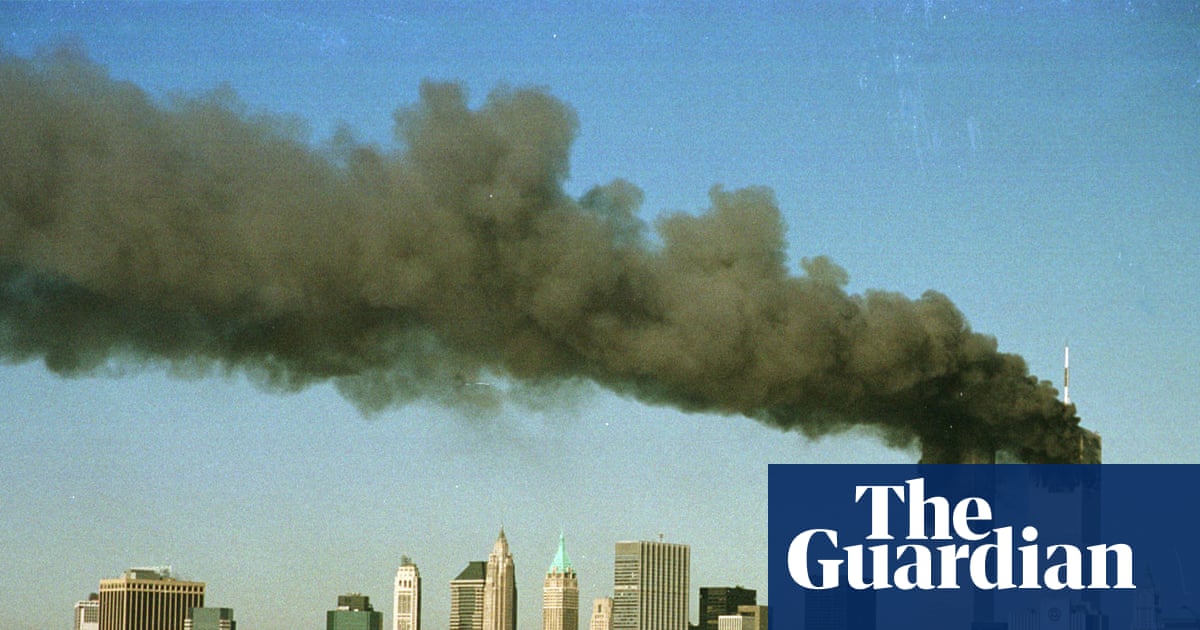
Two months later, on 11 September, Basinski woke up – and watched the twin towers burn and collapse from the roof of his home in Williamsburg, New York. While trying to process the fallout, he did what he had done every other day over the previous weeks and cranked up the beautiful, stately recordings he would name The Disintegration Loops. That’s when it struck him. “Everything changed that day,” he says. “The world changed. And the music changed. I realised that this music was now an elegy.”
The Disintegration Loops, first released in 2002, has since become one of the most important musical recordings of the 21st century. Around the same time, Anohni’s career also took off: she won the Mercury in 2005 for I Am a Bird Now and then released a series of beautiful and harrowing recordings mourning the ecological collapse of the planet, from 2010’s Swanlights to 2016’s Hopelessness.
The success of both artists is intertwined: Anohni was a frequent performer at Basinski’s avant-garde performance space Arcadia throughout the 1990s. She was also a key messenger, spreading the word that the man she calls Billy had created a masterpiece. To mark 25 years since the Disintegration recordings were made, we invited Anohni and Basinski to meet up and tell the full story …
Anohni: Before The Disintegration Loops, you were not feeling very hopeful about things, were you, Billy?
William Basinski: I was in despair! I had worked my whole life creating this music that nobody got apart from my artist friends: Jamie [Elaine, Basinski’s partner], Anohni, Howard Schwartzberg, you know?
Anohni: It did feel like divine intervention, as if this work had fallen into your hands. I knew it was an inevitability that Billy’s music would eventually reach the public, but it was disorienting how many years were passing by. I don’t know if you believed it. But I did, because it was the soundtrack to my life. It helped me heal through the 1990s. Billy is the artist I’ve listened to the most, by many thousands of hours. I often say his music would be my choice for a soundtrack to my experience of eternity.
WB: In the weeks before 9/11, I was playing it all the time on these massive speakers we had up on the roof. It made me think about Turner paintings and the ruining of the American pastoral landscape for profit, with the beaver trade and the wood trade. The same thing that’s happening now, only these days it’s even more cancerous.
Anohni: I had been doing the same thing at my home. I was playing the loops through the nights and days. On 9/11, I remember looking with you at the view from the rooftop. The Disintegration Loops was blasting out on full volume. It was like everything got welded together suddenly by the trauma of that moment. It felt biblical. The sadism of the event was so advanced and so exquisitely choreographed. At the same time, we came from an era of Aids. We came from a community that was viscerally and intimately experienced in the feeling of annihilation. So when we watched 9/11 I remember being scared, but also feeling that this kind of trauma was familiar to me. The idea that 2,000 people could suddenly evacuate the planet? That’s called Aids. Young people in our community had experienced an apocalyptic event that took their best friends, their family members and mentors. My sense of things was that Aids, 9/11, and the emergence of global ecocide were all aspects of a system that was deeply unwell. That’s something Billy’s music was also recognising, holding open a space in which we could feel the big picture.
WB: Well, I’m 12 years older than you. I grew up with duck and cover, the idea of nuclear annihilation. I grew up with Reagan getting rid of asylums and giving all the money to rich people for dribble-down, trickle-down economics. New York was a disastrous mess at that time, but it was cheap and anyone from the suburbs that had any artistic sensibility or desire to get out went there. I arrived in 1980. Then later on, Jamie and I converted this poor old pigeon loft we found in Williamsburg. It was $1,500 a month for this 4,000 sq ft place. We finished renovating around 1990 and named it Arcadia. It was so beautiful, with a studio and a stage. It had the scale of a Venetian palazzo. You’re talking about crotch-vaulted octagonal domes. It had a control room, a dressing room for the artists. When people entered after walking up these big industrial stairs – the shock on their faces! The music sounded amazing. I paid people $300 to perform. Nobody was getting $300 to perform! I would go out in the morning and get the dry ice, get all the beer and everything, and drag it up two flights of stairs. I had all these artists performing. And when we found someone we loved, we kept promoting them.
Anohni: It was an eclectic mix. There were electronic musicians, ambient musicians, cello trios like Melora Creager’s band Rasputina. One night Billy commissioned Diamanda Galás to come and do a big concert for Halloween. It was more intimate than anything Diamanda would usually do, because the space couldn’t really hold that many people.
WB: It was packed. There was 500 people there. Hal Willner was there!
Anohni: [Galás] being there was really significant because she was …
WB: She was a star! I had to rent a Steinway for her.
Anohni: Arcadia was also a way of watching Jamie’s paintings, which were all around the space. It was a very teaching environment for me, an example of two people living in their work. I liked to lie on the floor and just take shelter there. It was a very adult space. There were no hipsters in Williamsburg. It was primarily a Hispanic, Polish and Ukrainian community.
WB: They hadn’t started all the new development then. Now it looks like fucking Singapore, all these rich people with their strollers and $10 bespoke doughnuts. Anyway, Anohni was one of the artists we liked to promote. I first met her in the early 90s, in the dressing room at the Pyramid after one of her [queer performance art troupe] Blacklips shows. I was blown away. I went downstairs and told her I had a studio in Williamsburg and that I’d love to help her. And so she came over and we started working on a demo. At the time, she lived in this tiny bedsit in Manhattan, like 9ft by 15ft, packed with everything she owned. She started to come over to my place and we’d flop around, listen to music and relax.
Anohni: Billy and Jamie became my mentors.
WB: We put on the first Anohni and the Johnsons show at Arcadia. I was playing clarinet and saxophone and we had Julia Kent on cello, Joan As Police Woman was on violin and Maxim Moston and some others. That night we were also showing a film that I did with Jamie called Life on Mars, our low-budget version of 2001: A Space Odyssey. And my metalworker-sculptor friend across the street, Sasha Noe, brought along this beer bottle breaking machine he’d created which made a huge mess.
Anohni: A big moment for us was in November 2001, when we performed at PS 122, which is a legendary small theatre in the east village. I was just beginning my association with Lou Reed and he agreed to come and sing Candy Says. Johanna [Constantine] was dancing and Billy was showing the film of the smoke from 9/11 he made on the evening after the towers fell while playing The Disintegration Loops in a public forum for the first time [a still from the film is used on the album’s sleeve]. We were replaying it not as a newsreel but as a different kind of a reflection, in the context of Billy’s new music. It had a ceremonial aspect to it.
WB: It was a requiem. And then you started going around blabbing about it to everyone. You were in London and you told [musician and poet] David Tibet, who told David Keenan who wrote the feature in the Wire that really launched it.
Anohni: You didn’t know what it would become. You were just making what you perceived to be beautiful. But there’s often been a foreshadowing in underground queer work from New York. That’s why Peter Hujar made Portraits in Life and Death in the 1970s, years before Aids, or why Klaus Nomi was singing After the Fall and Total Eclipse shortly before his own death.
WB: It was about degradation and, I mean, look at the fucking mess in the country right now. Talk about degradation!
Anohni: The current administration is employing strategies in the US that they have been honing for over 40 years in collaboration with right-wing media. In the early 80s, Christian nationalists launched the Moral Majority and began building insidious coalitions between right-wing corporate agendas and Christian moral decree. They were weaponising fears about the spread of Aids in the way that they recently weaponised public ignorance about trans-existence in order to get Trump elected. But by the mid-1990s, I think my feelings and your feelings, Billy, were similar. We were seeing what was really happening and where it was heading. I did the Johnsons play Miracle Now in 1996, and your music was the soundtrack. If you’d asked us in 1995 what this moment, here in 2026, would look like, we might have said that it would look something like this, particularly in the way the biosphere is quietly collapsing behind the news of all this human drama. The feeling that most people around the world carry with them now, that sense of unease about the present and dread of the future, is something that some of us were already sitting with back then, maybe with slightly different imagery populating it, but with the same sense of the stakes and the scale. It was made obvious to us much earlier, as queer people, than it was to heterosexuals in the west. That’s why I think The Disintegration Loops developed a life of its own after 9/11, because that event affected everyone around the world. The music speaks to our human need for a way to express the inexpressible. It’s a soundtrack to help us move through these times.
WB: After 9/11 you’d go on to the train in New York and there was this thing called lip compression where you’d sort of look at a stranger and put your lips together … it was very tender. [He is crying.] People were helping each other. Like the people in Minneapolis are trying to help each other right now.
Anohni: There was an incredible peace. It was physical, you could feel it. It reminded me of when Lady Di got killed, almost like an unplugging for a moment from the cannibalistic speed of life. You walked down the road and everyone whose eyes you looked into was thinking and feeling the same thing. People were all swept up into the collective consciousness. It was a desire for peace.
WB: In 2011, I was invited by Ronen Givony to do a concert with the Wordless Music Orchestra. I said I’d really like to perform Disintegration Loop 1.1. I asked Max Moston to score it. He wrote this incredible analogue arrangement, right down to using clingfilm for the crackles, and it ended up being performed at the Temple of Dendur at the Metropolitan Museum of Art in New York to commemorate the 10-year anniversary of 9/11. There were 800 people there and 400 who couldn’t get in. There were old people, children, everyone. And at the end of the performance, there were these three minutes of absolute silence. Not a whisper, not a sound. It was like we’d all been turned to stone. Then this plane flew by overhead, picking up the F note at the end of the performance, and everybody just went nuts.
Anohni: It was amazing. It was so elevated. It felt like the music was becoming part of a myth, almost. I think your music is some of the only music fit for purpose to soundtrack the times we’re now in. Because you really sit with the content. You let the feelings go through your body, you process it all intuitively, and then it comes through your hands. You’re such a loving person, but it’s more than that. You really facilitate music.
WB [tearing up]: Oh, I would say that about you as well, darling!
Anohni: Oh, I’m much more of a mess. I’m not like that at all.
WB: We’re both empaths. And we have to be. Anohni, you’re an angel. I love you so much.
Anohni: Well, you’re my angel, Billy. I love you for ever.